
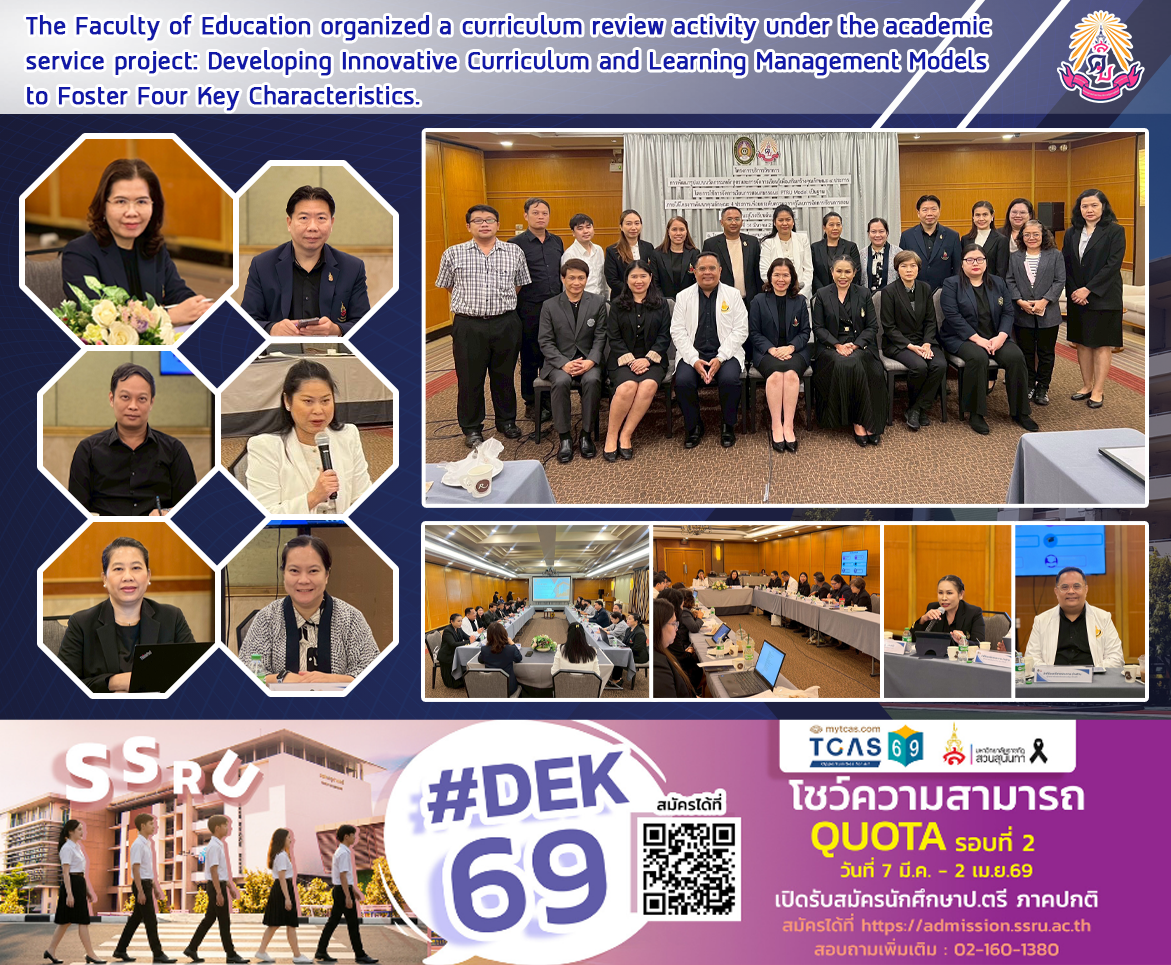
The Faculty of Education, Suan Sunandha Rajabhat University, organized a curriculum critique session under the academic service project titled “Development of Innovative Curriculum Models and Learning Management to Enhance the Four Desired Characteristics Based on the PTRU Competency-Based Model” on Saturday, March 14, 2026, at Phanurangsi C Conference Room, Royal River Hotel, Bangkok. The event was presided over by Assistant Professor Dr. Kannikar Piromrat, Dean of the Faculty of Education.
The objective of this activity was to develop innovative curriculum models and learning management approaches for area-based model schools, aiming to enhance students’ literacy in alignment with the PISA framework alongside the four desired characteristics, using the PTRU Model as a foundation. It also aimed to design learning packages and instructional tools to support the effective implementation of these model schools in real contextual settings.
The session brought together distinguished experts from various sectors to provide academic critiques and recommendations, including representatives from Srinakharinwirot University, the Bangkok Secondary Educational Service Area Office 1, the Office of the Basic Education Commission (OBEC), the Institute for the Promotion of Teaching Science and Technology (IPST), and leading model schools.
Importantly, this project also reflects a strong commitment to the Sustainable Development Goals (SDGs). It contributes to SDG 4 (Quality Education) by promoting competency-based curriculum development and enhancing students’ literacy skills essential for the 21st century. Furthermore, it aligns with SDG 17 (Partnerships for the Goals) through collaboration among universities, educational agencies, and schools to co-develop and refine educational innovations. In addition, the project supports SDG 10 (Reduced Inequalities) by expanding access to innovative learning models for area-based schools, ensuring more equitable educational opportunities.
The outcomes of the curriculum critique provided valuable insights for improving curriculum design and instructional tools, making them more relevant, competency-based, and applicable in practice. These efforts are expected to contribute significantly to the sustainable improvement of educational quality in the future.